What airport lounges are and why they matter
The three types of lounges, what's usually inside, and how people actually get in.
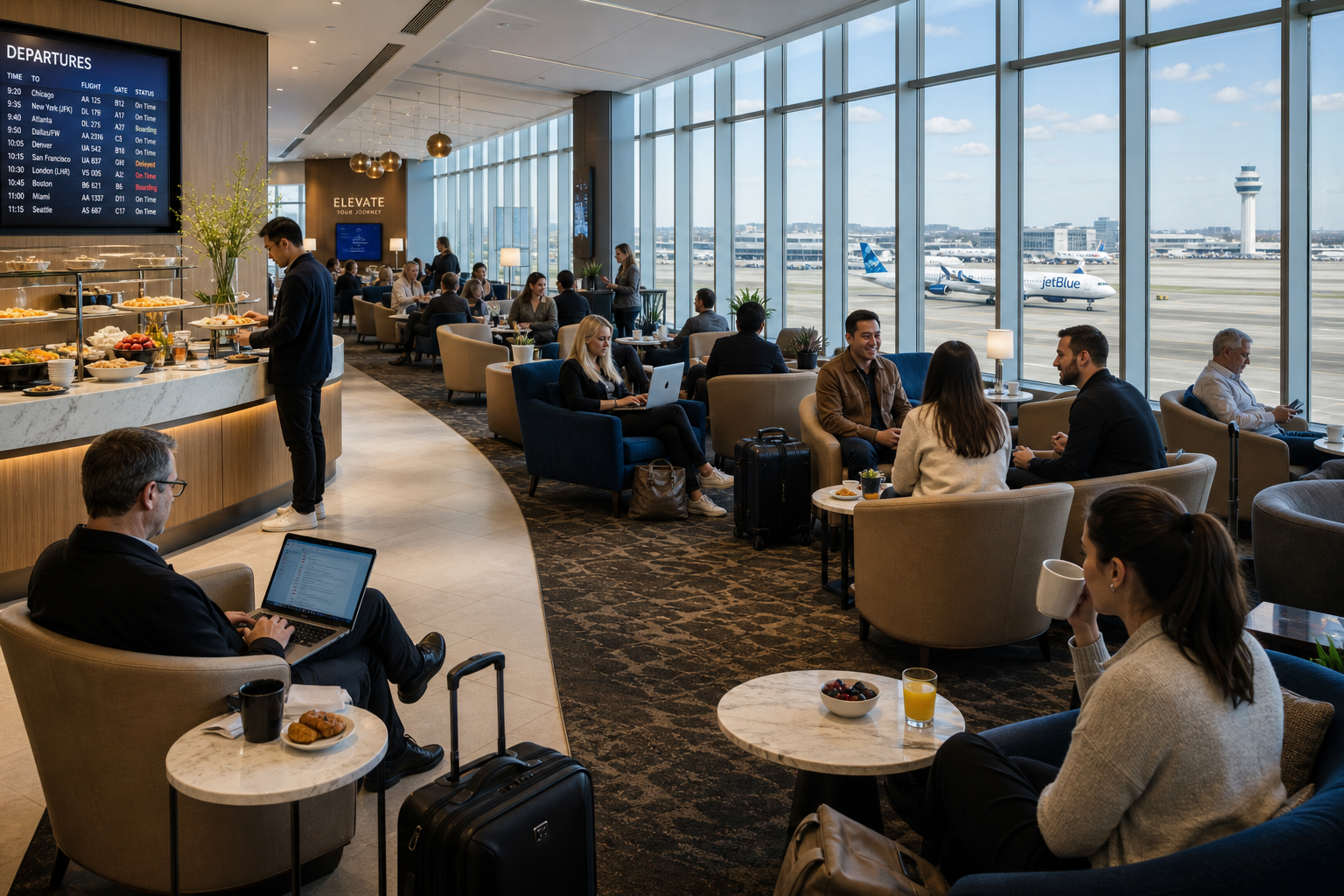
Airport lounges are the quiet rooms behind the club doors: better seats, free food and drink, Wi-Fi that works, and sometimes showers. They're worth knowing about because the entry rules are messy and the quality gap between lounges is huge.
Three kinds of lounges
Airline lounges belong to a carrier. Delta Sky Club, Admirals Club, United Club. You typically need elite status, a premium ticket on that airline, or a qualifying membership.
Independent lounges (Plaza Premium, The Club and others) aren't tied to one airline. They sell day passes and honor programs like Priority Pass.
Card-owned lounges (Centurion, Chase Sapphire, Capital One) are built for specific cardholders. Small network, often the nicest rooms, strictest rules.
The type determines who can walk in and what you should expect inside.
What's usually inside
Standards vary, but most lounges offer:
- Seating that's actually comfortable, often with quieter zones
- Wi-Fi, outlets, and sometimes desks or meeting space
- Complimentary food and drinks, from snacks to hot meals depending on the location
- Showers at larger hubs
Flagship airline lounges and card-owned locations tend to invest more in food and design. A regional club on a slow afternoon can feel like a nice cafeteria. Check recent reviews for the specific room you're heading to.
How people get in
- Ticket or status. Business class, first class, or airline elite status on the operating carrier.
- Membership. Priority Pass, LoungeKey, airline club subscriptions.
- Credit card benefit. Premium travel cards often bundle lounge access or a Priority Pass membership.
- Pay at the door. Day passes at airline clubs and many independent lounges.
Most travelers use more than one of these over time. The trick is knowing which applies at which door.
Airline vs. independent
Airline lounges skew toward that carrier's passengers. Branding, flight help, and sometimes tighter entry checks. Great if you fly one airline a lot.
Independent lounges take a wider mix of travelers. Quality is more consistent across cities, but the vibe is generic by design.
Neither is automatically better. It depends on your ticket, status, and what's in your terminal that day.
Credit cards and lounge access
Premium cards are a common entry point. Examples:
- Amex Platinum: Centurion Lounges, Priority Pass Select, Delta Sky Club when flying Delta (with limits).
- Chase Sapphire Reserve: Priority Pass Select plus access to Chase Sapphire Lounges where they exist.
Benefits change. Issuers tighten guest rules, add enrollment steps, and drop lounge partners. Verify on your issuer's site before a trip, not from a blog post written last month.
The practical takeaway
Lounges are useful when the terminal is crowded, you have a long layover, or you need to work before a flight. They're not magic, and access is never guaranteed until someone scans your boarding pass.
LoungeAdvisor exists to cut through the rule stack: add what you carry, open an airport, and see which doors you can use.